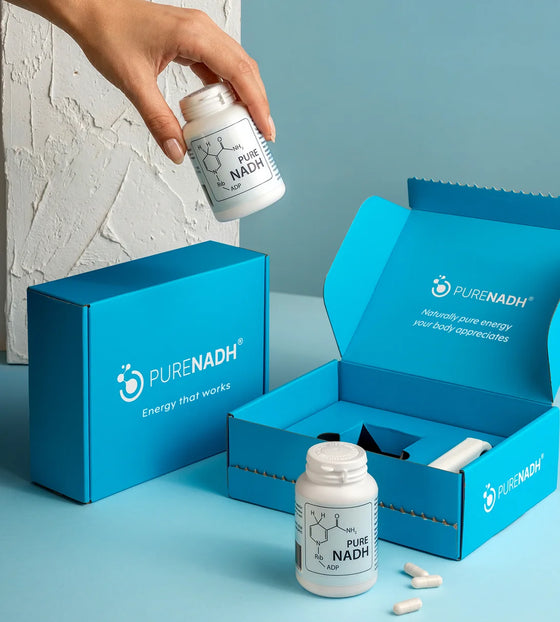
NADH stands for nicotinamide adenine dinucleotide plus hydrogen. It is a natural coenzyme found in the body and involved in the process your cells use to create energy.
That may sound technical, but the idea is simple: NADH helps your cells convert nutrients into usable energy.
NADH and ATP
ATP is the energy currency of the cell. Your body uses ATP for almost everything: thinking, moving, repairing, recovering, and maintaining normal function. NADH helps support the energy-producing process that creates ATP.
This is why NADH is often discussed in connection with mitochondria, focus, physical vitality, and healthy aging.
Why mitochondria matter
Mitochondria help produce energy inside your cells. When mitochondrial function is well supported, the body has a better foundation for daily energy metabolism.
NADH plays an important role in this process by helping move electrons through the cellular energy pathway.
NADH for focus and daily performance
The brain uses a lot of energy. Supporting cellular energy metabolism can be part of a routine for mental clarity, focus, and steady performance.
PureNADH is not a stimulant. It is designed to support the body's own energy metabolism at the cellular level.
Why PureNADH
PureNADH is made for people who want simple, targeted support for cellular energy, mitochondrial function, and healthy aging.
If you are new to NADH, think of it as support for the energy systems your body already uses every day.